Player Education Is Now a Core Pillar of Safer Gambling
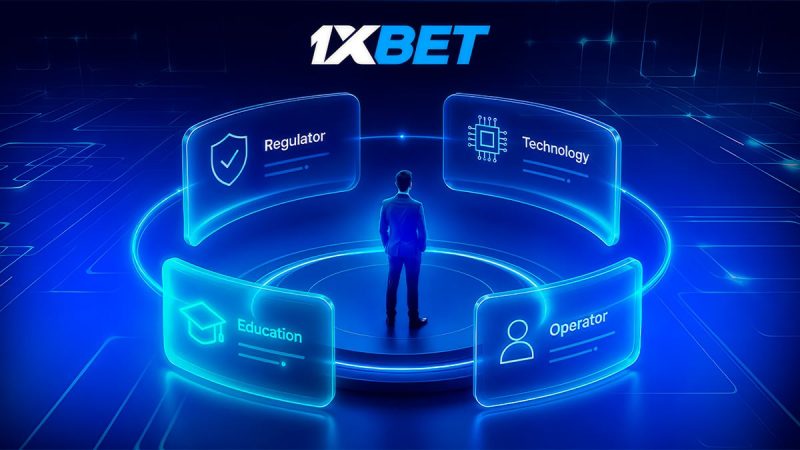
Player education is no longer a footnote in responsible gambling frameworks — it is rapidly becoming one of the most critical structural components of how the iGaming industry protects its users. A new wave of operator-led initiatives and independent research is pushing the conversation well beyond self-exclusion tools and deposit limits, toward something more proactive: genuinely informed players.
That shift matters enormously for crash gambling audiences. Fast-paced, multiplier-driven formats attract players who make dozens of decisions per session. The margin between informed play and impulsive behavior is thin. How the industry responds to that reality is starting to define its next decade.
What the Industry Just Did
1xBet recently examined the findings of the Player Protection Index Series report, exploring why player education is moving to the center of responsible gambling strategy, as reported by Yogonet. The core argument: over the past 20 years, iGaming has evolved from a niche corner of online entertainment into a fully independent ecosystem with layered architecture — and the safety infrastructure has struggled to keep pace with that scale.
The report’s framing is notable. Rather than placing the entire burden of player protection on operators or regulators alone, it positions safety as a shared responsibility — one that requires players themselves to be equipped with meaningful knowledge about risk, odds, and behavioral patterns. That is a subtle but significant reframe. It acknowledges that no amount of back-end tooling replaces an educated user making conscious choices.
The timing aligns with broader industry movement. Prediction market platform Kalshi recently committed $2 million over two years to the National Council on Problem Gambling, specifically to fund a strategic initiative around trader health and safety — including expanded education and awareness programs. Kalshi became the first prediction market to join the NCPG, a move Axios described as an acknowledgment that some users may be engaging in troubling financial behavior on the platform. Separately, Colorado’s SB 26-131, a wide-ranging responsible gaming bill, is advancing toward becoming law, adding legislative weight to what operators are already doing voluntarily.
Taken together, these developments paint a consistent picture: the industry — across gambling, prediction markets, and regulated sports betting — is converging on education as the next meaningful lever for harm reduction.
The Bigger Picture
This is not the first time the sector has been forced to rethink its approach to player welfare. The UK Gambling Commission’s tightening of affordability checks in 2023 and 2024 sparked fierce debate about where operator responsibility ends and player autonomy begins. That tension never fully resolved — it just shifted terrain. Now, rather than fighting over surveillance-style financial monitoring, the conversation is moving toward something operators can actually deliver without alienating their user base: better information, earlier in the journey.
The crypto casino space has its own version of this challenge. Pseudonymous wallets, instant deposits, and 24/7 availability compress the natural friction points that might otherwise slow a player down. Platforms built around crash mechanics — where a single round can last under ten seconds — operate at a tempo that traditional responsible gambling tools were never designed for. A cooling-off period prompt after a 7-second round feels almost absurd. Education, delivered before a session starts rather than reactively during one, is a more logical fit for that environment.
Still, education initiatives only work if they reach players who are actually at risk, not just those who would have made informed decisions anyway. That targeting problem is one the industry has not yet solved cleanly.
What This Means for Crash Players
For anyone regularly playing crash titles — whether on Aviator by Spribe, or any of the dozens of multiplier-format games now available across crypto casinos — the direction of travel here has practical implications. Expect more operators to integrate pre-session educational prompts, session summaries with behavioral context, and clearer risk disclosures tied specifically to high-volatility game formats rather than generic gambling warnings.
Platforms like Stake have already built responsible gambling dashboards that go beyond the regulatory minimum. As the Player Protection Index findings filter through the industry, that kind of feature set is likely to become a baseline expectation rather than a differentiator. Crypto-native casinos operating under Curaçao or MGA licenses will face increasing pressure — both regulatory and reputational — to demonstrate that their education frameworks are substantive, not cosmetic.
Players who understand variance, expected value, and the mechanics of auto-cashout strategies are, statistically, less likely to chase losses. That is not just good ethics — it is good business for operators who want sustainable player lifetime value rather than short-cycle burnout.
Analyst Take
The framing of player safety as a shared responsibility is smart positioning, but it carries real risk of becoming a deflection if operators use it to shift accountability onto users without providing genuinely useful tools. The Kalshi $2 million commitment and Colorado’s legislative push suggest the pressure is real and cross-sector. For crash gambling platforms specifically, the challenge is designing education that matches the pace of the product — brief, contextual, and delivered at moments when it can actually land. Whether the industry builds that with sincerity or treats it as a compliance checkbox will be the defining question of the next regulatory cycle.