Fast Track Podcast Digs Into AI’s Role in iGaming Marketing
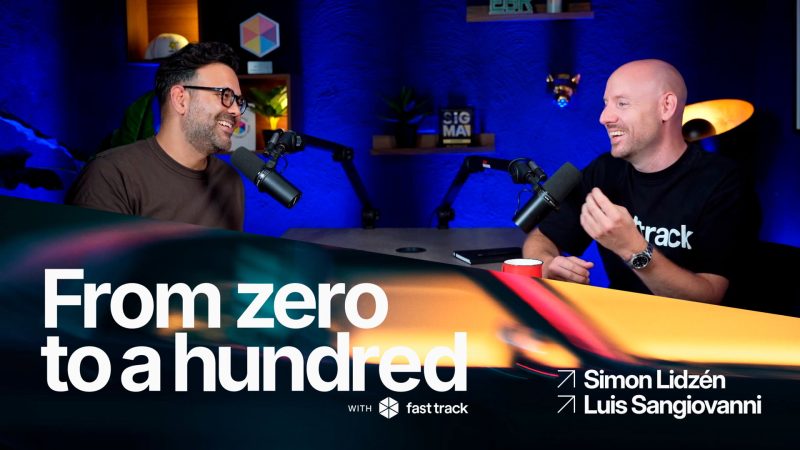
Fast Track’s From Zero to a Hundred podcast dropped its fourth episode on July 24, 2026, putting a spotlight on how artificial intelligence is quietly dismantling the old rules of iGaming marketing — and who gets to build things in the first place.
For crash gambling platforms and crypto casinos competing in an increasingly crowded retention economy, that conversation lands at exactly the right moment. AI-driven CRM, content automation, and smarter segmentation aren’t future-state anymore. They’re table stakes.
What Fast Track Just Dropped
The episode pairs company Co-Founder Simon Lidzén with Chief Marketing Officer Luis Sangiovanni for a candid back-and-forth on where AI is actually moving the needle — and where the hype still outpaces the reality. As reported by Yogonet, the conversation covers how AI is reshaping who can realistically ship working software, lowering the barrier for smaller iGaming operators to build and iterate without massive technical teams.
Sangiovanni’s perspective as CMO adds a layer that most tech-first podcasts skip: the marketing execution side. The discussion gets into experimentation culture — how operators should be testing AI-assisted content strategies rather than waiting for a proven playbook — and how Fast Track’s own CRM infrastructure fits into that loop. The episode is live now on both Spotify and YouTube.
Fast Track has been building its podcast presence steadily through 2026, using the format to position itself as a thought-leadership voice in iGaming B2B. Three prior episodes laid groundwork around platform philosophy and operator growth. Episode four sharpens the lens considerably, zeroing in on AI as a practical marketing lever rather than an abstract concept.
The Bigger Picture
The timing of this conversation isn’t accidental. Across iGaming, the shift toward AI-optimized content is accelerating fast. Operators are no longer just asking how to rank on Google — they’re asking how to surface inside AI answer engines, the kind that pull synthesized responses rather than a list of blue links. That’s a fundamentally different content problem, and it’s one that Fast Track’s discussion directly addresses.
There’s a broader industry pattern worth noting here. The concept of the “universal entertainment app” — a single platform that blends multiple content formats to maximize session time — has been gaining traction well beyond iGaming. Netflix demonstrated the model at scale: wider content mix, longer dwell time, stronger monetization. For crash casino platforms, that translates into the pressure to offer not just games, but community features, live stats, provably fair transparency layers, and content that keeps players engaged between sessions.
AI makes that kind of multi-format operation more achievable for operators who aren’t sitting on enterprise-level headcounts. A lean team with the right AI tooling can now produce, test, and optimize content at a pace that would have required a full department two years ago. That democratization effect is exactly what Lidzén and Sangiovanni appear to be probing in the episode.
Fast Track’s CRM platform already sits at the intersection of player data and automated engagement. Layering AI-driven content strategy on top of that infrastructure is a logical next step — and one that positions the company squarely in the middle of where iGaming operator tech is heading.
What This Means for Crash Players
On the surface, a B2B podcast about AI marketing feels distant from the experience of someone loading up Aviator or spinning up a session on a crypto crash platform. But the downstream effects are real and worth understanding.
When operators get smarter about AI-driven CRM and content personalization, the player-facing result is more relevant bonus offers, better-timed promotions, and retention mechanics that actually match how you play — not a generic email blast. Crash gambling platforms running on advanced CRM infrastructure can identify high-volatility players, tailor multiplier-focused campaigns, and time re-engagement pushes around actual behavioral signals rather than arbitrary schedules.
Crypto casino players specifically benefit when operators can move fast. AI-assisted content pipelines mean faster educational content around new game mechanics, quicker updates when payout structures shift, and more responsive community engagement. The gap between a well-resourced operator and a scrappy one narrows when AI handles the heavy lifting.
Still, the quality of that personalization depends entirely on the underlying data architecture. Operators running on robust CRM platforms — the kind Fast Track is built around — are better positioned to translate AI capability into genuine player experience improvements. Those on legacy stacks will struggle to compete, regardless of how good their AI tooling looks on a slide deck.
Analyst Take
Fast Track choosing to explore AI through a marketing lens rather than a pure product lens is a smart editorial call for the podcast. The “AI will write your code” narrative is well-worn at this point. The more interesting question — and the one Lidzén and Sangiovanni appear to be tackling — is what happens when AI compresses the cost of experimentation so dramatically that every mid-tier operator can run like a growth team. That’s a competitive pressure that will reshape operator differentiation in iGaming over the next 18 to 24 months, and platforms that haven’t started building that muscle now will feel it acutely.