Lula Re-Elected: Brazil’s Betting Ban Leaves 188 Brands in Limbo
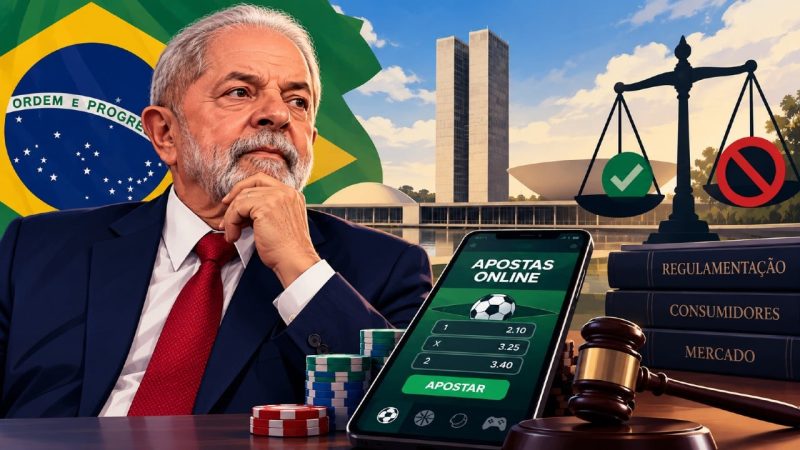
Luiz Inácio Lula da Silva’s return to Brazil’s presidency for another term has reignited one of the most contentious regulatory battles in Latin American gambling history — and the country’s licensed betting operators are bracing for what comes next.
A Regulated Market Gutted From the Inside
Brazil’s government moved aggressively against fixed-odds sports betting through Provisional Measure 1.394/2026, which prohibited both the operation and advertising of that product category outright. The fallout was immediate and severe. All 85 authorizations previously granted by the Secretariat of Prizes and Betting, under the Ministry of Finance, were allowed to expire. Those 85 licenses collectively covered 188 active brands. Every single one of those operators is now shut out of the legal market — and, critically, the licensing fees they paid will not be refunded.
That is not a minor administrative footnote. Operators invested heavily to enter Brazil’s regulated framework, a process that demanded compliance infrastructure, local partnerships, and significant upfront capital. Stripping those authorizations without reimbursement effectively punishes the companies that chose to play by the rules.
As reported by Yogonet International, BNL Data editor Magno José argues that the government’s crackdown has not cleaned up Brazil’s betting landscape — it has simply handed market share back to unlicensed operators who face no regulatory pressure whatsoever.
The Paradox of Prohibition in a Maturing Market
Brazil’s regulated betting framework was, until recently, one of the most anticipated market openings in global iGaming. The country’s population of over 200 million, combined with deep football culture and rapid smartphone penetration, made it a tier-one target for operators worldwide. The government’s own licensing process reflected that ambition — 85 authorizations across 188 brands is not a cautious, limited rollout. It is a market that was meant to scale.
The reversal is jarring. Prohibition-style measures in mature or maturing betting markets have a documented track record of failure. When the UK tightened its advertising rules aggressively in the early 2020s, grey-market activity spiked in specific demographics before regulators recalibrated. Brazil’s situation is more extreme — it has not tightened rules, it has eliminated the legal product category entirely for now.
The legal and political challenges ahead are significant. Operators who paid licensing fees have a credible grievance, and some are expected to pursue legal remedies. The constitutional validity of Provisional Measure 1.394/2026 itself may face challenges, given that provisional measures in Brazil carry strict scope and duration requirements.
What Lula’s Second Term Signals for the Sector
Lula’s re-election does not automatically mean the ban becomes permanent policy. Provisional measures are, by definition, temporary instruments — they require congressional conversion into law to stick. That process opens a window for lobbying, legal challenge, and political negotiation. The betting industry, both domestic and international, will almost certainly mobilize through that window.
Still, the direction of travel under this administration has been unmistakably hostile to commercial sports betting. The government has framed the sector as a social harm driver, pointing to problem gambling concerns and the proliferation of low-quality offshore operators. Those arguments resonate with a portion of the Brazilian electorate, which gives the administration political cover to maintain a tough stance even as the legal market collapses.
Notably, a proposal dubbed the “Lula Law” has also been floated in Buenos Aires province in Argentina — seeking to ban online betting outright — suggesting the regulatory mood across parts of Latin America is shifting toward restriction rather than liberalization. Whether that trend holds or reverses will depend heavily on how Brazil’s situation resolves over the next 12 to 18 months.
Operators, Compliance Costs, and the Road Ahead
For the 188 brands now locked out of Brazil’s legal market, the immediate calculus is brutal. Sunk compliance costs, non-refundable licensing fees, and a customer base that will not simply disappear — it will migrate to unlicensed alternatives. That migration undermines the very consumer protection rationale the government cited when pushing for stricter oversight in the first place.
The path to correction, as Magno José frames it, requires the incoming administration to acknowledge that prohibition has weakened — not strengthened — the regulated market. Reversing course means re-engaging with operators, restoring some form of licensing pathway, and building a framework that balances consumer protection with commercial viability. None of that is simple, and none of it is fast.
What is clear is that Brazil’s betting sector enters Lula’s new term in a state of deep uncertainty. Operators, investors, and regulators across Latin America will be watching closely to see whether the government treats this as a policy mistake worth correcting — or doubles down on a prohibition that is already reshaping the market in ways it did not intend.