BetHog Closing July 31 as Eccles Bets Big on AI Dealers
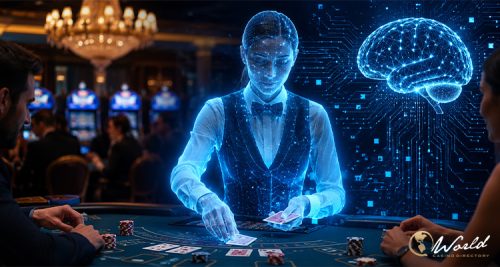
Nigel Eccles, the co-founder of FanDuel, is pulling the plug on his crypto casino and sportsbook BetHog on July 31, 2026 — and he’s doing it by choice. The platform isn’t collapsing under losses or regulatory pressure. Eccles is simply betting that the real money is elsewhere: in AI-powered live dealer technology built for operators, not players.
That’s a rare kind of shutdown. Not a failure. A deliberate pivot. And in an industry where most closures come with spin and silence, the transparency here is worth paying attention to.
What BetHog Just Did
Eccles confirmed that BetHog will cease all operations at the end of July 2026, redirecting the company’s full energy toward Sentient Studios, its AI dealer development arm. As reported by World Casino Directory, Eccles was candid about the reasoning: “The main factor is really the success of Sentient Studios. We have significant pull from operators for our AI dealer.”
BetHog, he noted, performed broadly in line with what the team projected. This wasn’t a platform hemorrhaging users or burning through runway with nothing to show. The problem was simpler — scaling it to genuine long-term profitability would demand a level of capital investment that no longer made sense when Sentient Studios was already generating serious operator interest.
So rather than split focus and dilute resources across two very different business models, Eccles is consolidating. The consumer-facing crypto casino closes. The B2B AI technology studio scales up. Clean cut, clear rationale.
The Bigger Picture
This move lands at a fascinating moment for live dealer technology. The traditional live casino model — expensive studios, large human dealer teams, high operational overhead — has long been the domain of giants like Evolution Gaming. Smaller operators have largely had to license their way in or go without.
AI-generated dealers change that calculus entirely. If Sentient Studios can deliver convincing, scalable, cost-efficient AI dealer experiences, the addressable market isn’t a handful of premium operators. It’s every mid-tier crypto casino that currently can’t justify a live studio build-out. That’s a genuinely large opportunity, and the operator pull Eccles describes suggests the demand signal is real, not theoretical.
The broader AI race adds context here too. With major tech players facing their own internal bottlenecks in AI development, specialized iGaming-focused studios like Sentient have a window to establish themselves as the domain experts operators actually trust — rather than waiting for a general-purpose AI platform to eventually get around to their niche. Speed and specialization matter right now.
It’s also worth noting that crypto casino consolidation has been a recurring theme. The space saw a wave of smaller platforms either fold or get absorbed through 2024 and 2025 as user acquisition costs climbed and regulatory scrutiny tightened across multiple jurisdictions. BetHog’s exit is different in character — it’s a strategic reallocation, not a casualty — but it reflects the same underlying reality: running a full-stack crypto casino is genuinely hard, and the margin for error is thin.
What This Means for Crash Players
If you’re a crash gambling player who used BetHog, the immediate practical reality is straightforward: find a new home before July 31. That’s not a lot of runway, so now is the time to check withdrawal timelines and make sure your balance is sorted.
The longer-term implication is more interesting. If Sentient Studios succeeds in building AI dealer infrastructure that operators actually adopt at scale, the live casino experience across crypto platforms could shift meaningfully over the next two to three years. That doesn’t directly touch crash games like Aviator or Pigaboom, which run on provably fair RNG mechanics rather than dealer interaction — but it does shape the broader platform environment where crash titles live.
Casinos that can offer compelling AI-driven live dealer tables alongside a strong crash game library become more competitive overall. That’s good for players who want variety without sacrificing the crypto-native, fast-paced experience that crash gambling delivers. A rising tide of better platform quality lifts all verticals.
Still, crash players should watch which operators end up licensing Sentient Studios’ technology. If major crypto casinos integrate it, the ecosystem gets richer. If uptake is slow, this story stays niche.
Analyst Take
Eccles built FanDuel into one of the defining sports betting brands in North America. He knows what a genuinely scalable product looks like — and what it doesn’t. The decision to walk away from BetHog while it was still functional, rather than grinding it out hoping for a turnaround, suggests he’s seen something in Sentient Studios’ operator pipeline that he finds more compelling than anything BetHog’s trajectory was offering. Whether AI dealers become a standard feature across crypto casinos or remain a premium novelty is still an open question. But the fact that a founder of his caliber is staking his next chapter on it is a signal the industry probably shouldn’t ignore.