US Online Gambling Regulation: States Still Fighting for Legal Markets
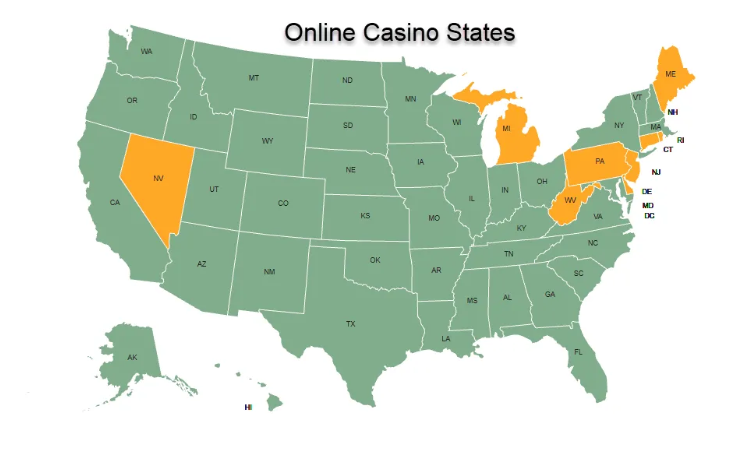
The US online gambling regulatory map remains a patchwork of ambition and stalled momentum heading into mid-2026, with several states still grinding through legislative cycles while the licensed market continues to mature in the handful of jurisdictions that got there first. Progress is real. But it is uneven, and the gap between states moving fast and states moving nowhere is widening.
For crash gambling fans and crypto casino players watching the US market, this matters directly. Every new regulated state is a potential green light for licensed operators — and, eventually, for the crash game verticals those operators carry.
Where the US Online Casino Push Stands Right Now
As reported by Casino Reports, the current US online gambling landscape is best described as battered but still standing — a slow-burn legislative fight that refuses to die even when individual state efforts collapse in a given session. Several states remain in active consideration for both online casino and online poker legalization, though the path through state legislatures is rarely straight.
The legal and regulatory scene continues to be shaped by a mix of competing interests: commercial casino operators pushing for digital expansion, tribal gaming compacts that complicate online frameworks, and state budget pressures that make tax revenue from iGaming increasingly hard for lawmakers to ignore. That last factor has quietly become one of the strongest arguments in favor of legalization — states watching New Jersey, Pennsylvania, and Michigan pull in hundreds of millions annually in online casino tax revenue are paying close attention.
Online poker, long the more politically palatable cousin of online casino gaming, is also back on the table in select states. Multi-state internet gaming agreements — the kind that allow shared player pools across state lines — remain a structural advantage for poker specifically, and operators have not stopped lobbying for them.
Technological shifts are also reshaping the conversation. Artificial intelligence applications in responsible gambling tools, fraud detection, and KYC verification are giving regulators more confidence that a digital market can be monitored effectively. That is a meaningful shift from even three years ago, when the compliance argument was often used against legalization rather than for it.
The Bigger Picture: A Market That Keeps Proving Its Value
The US regulated online gambling market has now had enough years of live data to make the economic case almost inarguable. New Jersey crossed the $2 billion annual online casino gross gaming revenue threshold. Pennsylvania and Michigan have both established themselves as major markets. The argument that online gambling cannibalizes land-based revenue has largely been put to rest by the numbers — the two channels appear to serve overlapping but distinct player behaviors.
Still, the pace of state-level adoption has been slower than many in the industry projected when sports betting’s post-PASPA expansion looked like it might drag online casino legalization along with it. Sports betting spread to over 30 states with remarkable speed after 2018. Online casino gaming has not replicated that trajectory. The reasons are partly political, partly structural — casino gaming carries more cultural weight as a regulatory question than sports wagering does.
Crypto casino operators have watched this dynamic carefully. Platforms that built their user bases on provably fair mechanics, fast withdrawals, and Bitcoin-denominated play have a loyal audience that exists largely outside the regulated US framework. That audience is not going anywhere. But a wave of state-level legalization would force a reckoning about licensing, compliance, and whether crypto-native operators can or want to compete inside a regulated structure.
Similar tensions played out in 2023 and 2024 as several European jurisdictions tightened their frameworks, pushing players toward unlicensed alternatives — a cycle that regulators have struggled to break cleanly in any market.
What This Means for Crash Players and Crypto Casino Users
For the crash gambling community specifically, the US regulatory picture is a slow-moving but consequential backdrop. Aviator by Spribe and comparable titles have built enormous global audiences, but their presence inside licensed US platforms remains limited by the small number of regulated states. Every new state that legalizes online casino gaming is a potential distribution channel for crash titles.
Crypto-native crash platforms operating outside US licensing frameworks face a different kind of pressure. Increased regulatory scrutiny — both at the state level and through federal financial compliance channels — means the operating environment for unlicensed crypto casinos targeting US players is not getting easier. Players in legal-gray jurisdictions should be aware that this landscape is actively shifting.
That said, the core appeal of crash games — transparent mechanics, fast rounds, community multiplier energy — translates cleanly into regulated environments when operators choose to carry them. The demand side of the equation is not the problem.
Analyst Take
The US online gambling story in 2026 is genuinely one of resilience over speed. The market is not expanding as fast as optimists hoped, but it is not retreating either. Each failed legislative session tends to produce a better-drafted bill the following year, and the fiscal argument for legalization only gets stronger as neighboring states report their revenue figures. For crash game providers and crypto casino operators with long-term US ambitions, the play is patience — and positioning. The door is not closed. It is just taking longer to open than anyone expected.