US Congress Grills Sports Betting Risks for College Students
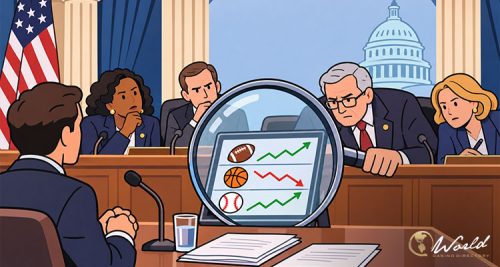
A US House subcommittee put the gambling industry under a congressional microscope on November 11, 2026, scrutinizing how legal sports wagering is reshaping life — and finances — for college students across America. The hearing arrived at a moment when mobile betting apps and prediction market platforms have made placing a wager as frictionless as ordering a pizza, and lawmakers are clearly uneasy about it.
What exactly did Congress examine at this hearing?
The session, formally titled The Rise of Sports Gambling on College Campuses, was convened by the House Committee on Education and the Workforce’s Subcommittee on Higher Education and Workforce Development. Subcommittee chair Michael Baumgartner framed the core anxiety bluntly: online sportsbooks and prediction market apps have effectively placed miniature casinos directly in students’ hands, lowering the barrier to impulsive, high-frequency betting to near zero.
The agenda was broader than simple wagering volume. Lawmakers drilled into betting integrity, athlete harassment tied to prop bets, financial stress among student bettors, problem gambling rates on campuses, and whether universities are adequately equipped — or even trying — to provide support services. Player proposition bets drew particular scrutiny, given their potential to incentivize harassment of individual athletes when results disappoint bettors.
As reported by World Casino Directory, the hearing also trained attention on prediction market apps, which have grown rapidly alongside traditional sportsbooks and occupy a regulatory grey zone that existing frameworks weren’t designed to handle.
Why is this happening now?
The timing is not accidental. Since the Supreme Court’s 2018 Murphy v. NCAA ruling dismantled the federal ban on sports betting, more than 30 states have legalized some form of sports wagering. The market exploded. Mobile-first operators rushed in. And college campuses, packed with young adults who grew up digital-native, became a natural — and lucrative — target demographic.
Problem gambling researchers have flagged for years that 18-to-24-year-olds show disproportionately high rates of gambling disorder compared to older adults. Add the social pressure of sports fandom, the dopamine loop of live in-game betting, and the financial precarity many students already face, and you have a combustible mix. Congress is responding to that accumulating evidence, even if concrete legislative outcomes from this particular hearing remain undefined.
It echoes the trajectory seen in the UK, where the Gambling Act review process stretched across multiple years of parliamentary hearings before producing the 2023 white paper — a reminder that congressional scrutiny rarely moves fast, but it does eventually move.
Does any of this touch crash gambling or crypto casino players?
Directly? Not yet. The hearing’s lens was fixed on licensed US sportsbooks and prediction market platforms, not on crash games or crypto casinos. That said, the regulatory mood matters for the broader online gambling ecosystem. When legislators start talking about “miniature casinos in the palms of our hands,” they are describing an experience — instant access, high engagement, mobile-first — that crash gambling platforms know intimately.
Prediction markets drew specific concern at the hearing, and their mechanics — binary outcomes, rapid resolution, repeat wagering — share DNA with the fast-cycle gameplay that defines crash titles. If federal appetite for tighter guardrails grows, crypto casino operators and crash game providers serving US-adjacent audiences will want to watch this space carefully. Regulators rarely stop at the first target.
Still, for now, the hearing produced discussion rather than legislation. No specific bills were introduced or voted on during the November 11 session.
What should the crash gambling community actually take from this?
Three things. First, responsible gambling infrastructure is becoming a political talking point at the highest levels of US government — operators who treat it as a checkbox rather than a genuine product feature are taking on reputational and regulatory risk. Second, the scrutiny of prediction markets signals that fast, app-based wagering products are no longer flying under the radar. Third, the athlete harassment angle tied to player prop bets is a reminder that when gambling products intersect with real identifiable individuals, the political heat intensifies fast.
For crash game fans and crypto casino regulars, the practical impact today is minimal. But the direction of travel is clear. Congressional attention on mobile-first gambling formats is accelerating, and the industry’s long-running argument that self-regulation is sufficient is getting harder to sustain in a hearing room.
Watch for follow-up legislation proposals in early 2027. This subcommittee rarely holds a high-profile hearing without at least floating a draft bill in the months that follow.