German Courts Open Door to Online Gambling Loss Refunds
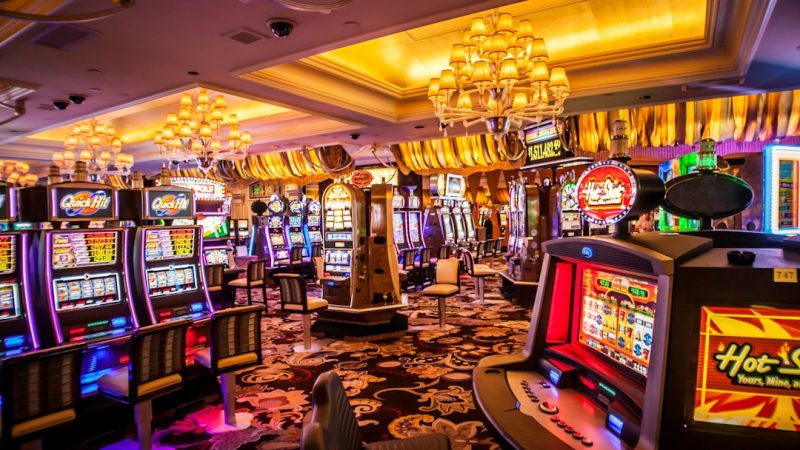
German players who lost money at unlicensed online casinos now have a credible legal path to recover those losses, following a chain of court rulings that has shifted the balance of power firmly toward consumers.
Courts Back Players on Unlicensed Operator Losses
The legal momentum began on 19 March 2026, when the Advocate General of the European Court of Justice published an opinion with serious consequences for the industry. The opinion held that sports betting operators running without the required license can, in principle, be compelled to refund stakes paid by their customers. One carve-out exists: if a provider was blocked from obtaining a license because of flaws in the licensing process itself — flaws that violated EU law — that operator may escape liability. Outside that narrow exception, though, the door to refund claims swings wide open.
German courts have since followed the ECJ’s lead. As reported by GamblingNews.com, domestic rulings have reinforced the principle that gamblers can pursue compensation from operators where losses occurred under an unlicensed framework. The practical fallout is already visible in court dockets across the country.
63 Active Cases, €3.8 Million Already in Dispute
The numbers tell a pointed story. By the end of the first half of 2026, at least 63 separate legal proceedings were active in German courts, with a combined disputed value of approximately €3.81 million. That figure covers just one group of companies and only the first six months of the year. Scale that across the broader market — which includes dozens of operators that accepted German players during the years the country’s licensing framework was in legal limbo — and the potential exposure runs considerably higher.
Germany’s online gambling regulation has been a slow-motion legal saga. The State Treaty on Gambling (Glücksspielstaatsvertrag) that took effect in July 2021 was supposed to bring clarity, but the transition period left a grey zone that many operators exploited. Players who deposited and lost during that window are now the ones filing claims. The situation echoes earlier enforcement waves in Sweden, where regulators pursued operators that had accepted Swedish players without a local license before the 2019 re-regulation — though the German cases are being driven by individual players rather than the regulator itself.
What the ECJ Opinion Actually Changes
The Advocate General’s opinion is not a binding judgment, but ECJ opinions carry substantial weight and courts across EU member states routinely follow them. The German courts that have already aligned with the opinion’s reasoning are a sign of which way the wind is blowing. For operators, this creates a liability tail that extends back years. For players, it means losses once written off as sunk costs could become recoverable — provided they can demonstrate the operator lacked a valid license at the time of play.
The mechanics of a claim are straightforward in theory: a player shows they deposited and lost with an unlicensed operator, the operator cannot prove it was prevented from licensing by a procedurally defective process, and a court orders restitution. In practice, documentation and jurisdiction questions will complicate individual cases. Still, specialist law firms in Germany are already marketing refund services to former online casino customers, which suggests the legal community sees real commercial viability here.
Notably, the ruling’s scope extends to sports betting, not just casino verticals. That broadens the potential claimant pool significantly, given how many German consumers placed sports bets through internationally licensed but locally unlicensed platforms during the grey-market years.
Implications for Crypto Casinos and the Wider iGaming Market
For crypto-native platforms and offshore casinos that accepted German traffic without a local license, this ruling is a direct warning. Many such operators have historically relied on Curaçao or Malta licensing as a catch-all, but German courts are making clear that EU member-state licensing requirements carry independent legal weight. A Curaçao license does not insulate an operator from German consumer law if that operator was actively targeting German residents.
The ruling also has a chilling effect on the argument that players knowingly assumed the risk when using unlicensed sites. Courts are rejecting that framing. The legal obligation, in the ECJ’s view, sits with the operator — not the player — to ensure the regulatory environment is compliant before accepting bets.
For the crash gambling segment specifically, most reputable platforms serving European audiences have moved toward regulated licensing precisely to avoid this kind of exposure. Operators that have not made that transition should treat the German litigation wave as a leading indicator of where consumer protection law is heading across the EU. The 63 pending cases in Germany alone are unlikely to be the ceiling — they are almost certainly the floor.