Michigan Hits 33 Offshore Gambling Sites With Cease-and-Desist Orders
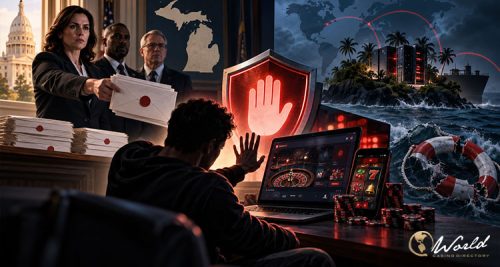
Michigan’s gambling regulator has drawn a hard line, firing off cease-and-desist letters to 33 offshore operators accused of serving state residents without holding a valid Michigan licence. The Michigan Gaming Control Board (MGCB) isn’t just flagging unlicensed activity — it’s raising a specific alarm about self-excluded players who remain dangerously exposed on platforms that aren’t bound by state rules.
This is a significant escalation. Thirty-three operators in a single enforcement sweep is not routine housekeeping. It signals a regulator that has moved from monitoring to active suppression — and the ripple effects reach well beyond Michigan’s borders.
What the MGCB Just Did
As reported by World Casino Directory, the MGCB issued cease-and-desist letters to 33 offshore gambling operators. The targeted sites allegedly offered a mix of online casino games, sweepstakes-style products, and sports betting to Michigan residents — all without the required state licence.
The regulator’s language was pointed. Officials specifically called out the risk facing players enrolled in Michigan’s self-exclusion programme. Those individuals voluntarily removed themselves from licensed gambling environments, but offshore platforms have zero obligation to cross-reference Michigan’s Internet Gaming and Sports Betting Responsible Gaming Database. That gap leaves some of the most vulnerable players completely unprotected.
The MGCB described self-exclusion as “one of the hardest and most courageous decisions” a person can make — and framed offshore operators as actively undermining that choice by remaining accessible to people who have explicitly asked to be kept away from gambling products.
The sweep covered operators running different product types: traditional online casino verticals, sports betting, and sweepstakes-model platforms, which have become a particularly contested category across multiple US states in recent years.
The Bigger Picture
Michigan isn’t operating in a vacuum here. US state regulators have been tightening their grip on offshore and unlicensed operators throughout the mid-2020s, as legal iGaming markets matured and tax revenues from licensed operators became politically valuable. The more money a state collects from regulated gambling, the stronger the incentive to shut down competitors who contribute nothing to the state’s coffers.
Sweepstakes casinos, in particular, have been a flashpoint. Several states have moved to classify them as gambling products subject to licensing requirements, rather than promotional tools exempt from gambling law. Michigan’s sweep — which explicitly includes sweepstakes-style products — fits that pattern precisely.
The self-exclusion angle adds a layer of genuine public interest concern that goes beyond revenue protection. Responsible gambling infrastructure only works when it’s universal. A player who self-excludes on a licensed Michigan platform but can still access an offshore site through a browser has, in practical terms, not been protected at all. Regulators across the US and Europe have been grappling with this exact problem for years, and it remains largely unsolved wherever offshore access persists.
Internationally, similar crackdowns have played out in Brazil, where Stake recently faced regulatory pressure before securing a temporary court reprieve from a betting ban — a reminder that even major crypto-native operators are not immune to jurisdictional enforcement actions when regulators decide to act.
What This Means for Crash Players
If you’re playing crash games — Aviator, JetX, or any other multiplier-format title — on a platform that doesn’t hold a licence in your jurisdiction, this enforcement action is a direct signal of where the regulatory wind is blowing. Michigan has now put 33 operators on notice. Other states are watching. And enforcement actions rarely stay isolated to one jurisdiction once a template is established.
For players in the US specifically, the practical risk isn’t just account closure. It’s the absence of the protections that licensed environments are legally required to provide: dispute resolution, responsible gambling tools, and self-exclusion enforcement. Offshore platforms can disappear overnight, taking balances with them, with no regulatory body obligated to intervene on your behalf.
Crypto casino players face an additional layer of complexity. Many offshore platforms that accept Bitcoin or stablecoins operate under Curaçao licences or similar offshore frameworks that carry limited weight with US state regulators. A Curaçao licence does not satisfy Michigan’s licensing requirements. Full stop.
The safest play — regardless of what games you prefer — is to verify that any platform you deposit on holds a licence recognised in your state or country. That’s not a guarantee of a perfect experience, but it’s the baseline that gives you legal recourse if something goes wrong.
Analyst Take
Thirty-three cease-and-desist letters in a single action is a statement of intent, not just a compliance exercise. The MGCB is signalling that Michigan’s licensed market is mature enough to defend aggressively — and that the self-exclusion argument gives regulators a compelling public-interest narrative that’s hard to argue against politically. Whether offshore operators comply, relocate their targeting, or simply ignore the letters is the real test. Cease-and-desist orders without enforcement mechanisms are loud but limited. The next move — whether Michigan pursues payment processor pressure, ISP blocking, or federal coordination — will determine whether this sweep has teeth or just noise.